

Chatting with Erstan
Start a new chat
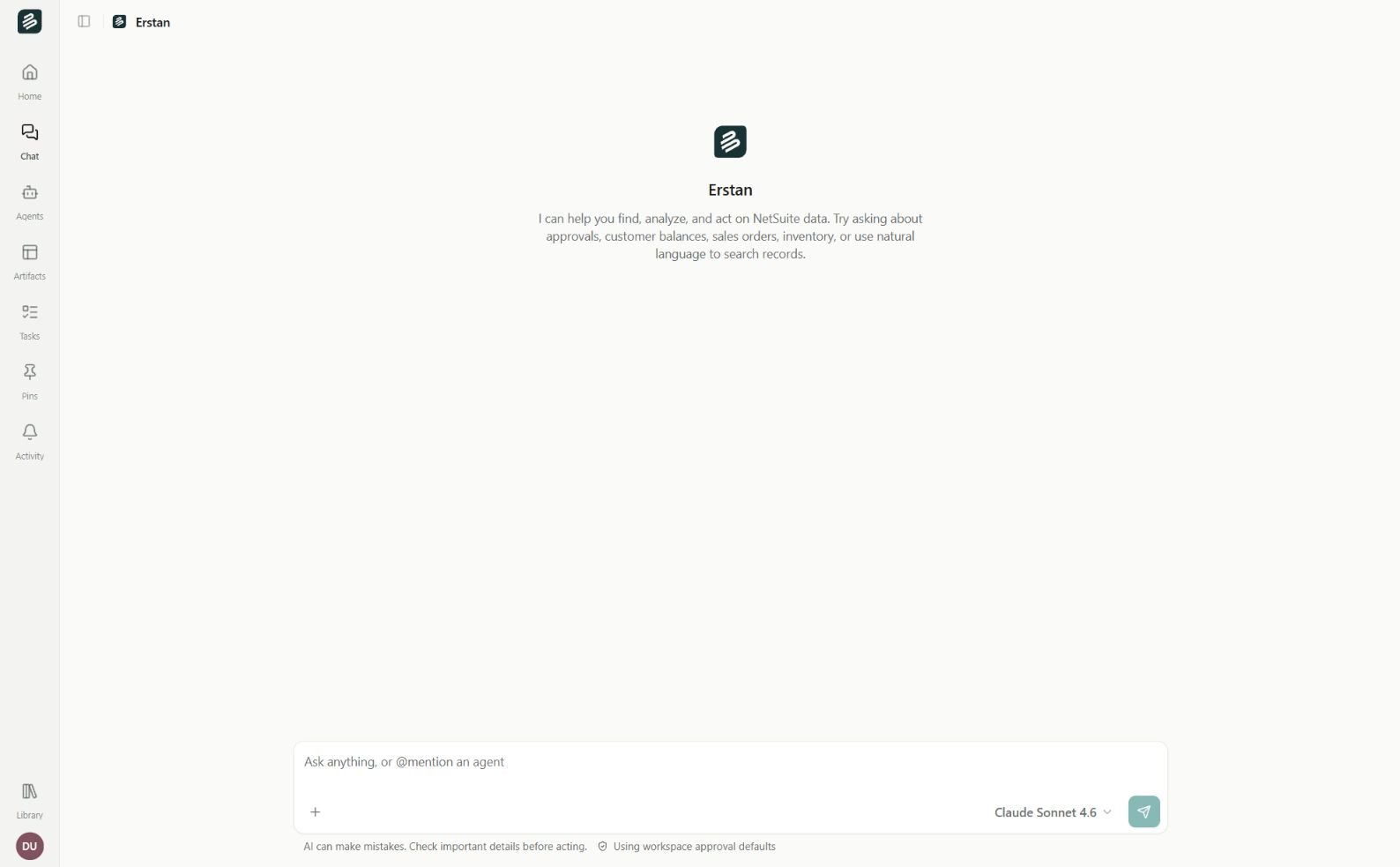
Open Chat from the sidebar, or click New chat in the history panel. A fresh conversation shows the Erstan assistant intro — “I can help you find, analyze, and act on NetSuite data…” — and the composer at the bottom.1
Type your question
Use the composer at the bottom. The placeholder reads “Ask anything, or @mention an agent”. Ask in business terms, for example “Show me overdue invoices over 60 days” or “Summarize AR aging by customer”.
2
Send it
Press Enter or click the submit button.
3
Watch the reply stream in
The assistant streams its answer into the transcript. Tool calls (such as a SuiteQL query or a NetSuite lookup) and reasoning can appear inline so you can see what it is doing, not just the final result.
@ to mention one — see Working with agents in chat.
A standing disclaimer sits under the composer: “AI can make mistakes. Check important details before acting.” Always review figures and records before you rely on them.
Attachments and skills
The composer’s + menu lets you attach a document or image, and insert a saved Skill into your message. You can also drag-and-drop or paste an image straight onto the chat. Attachments show as a chip above the input before you send. For connections, knowledge, web search, and the model selector — see Knowledge, tools, web search & models.Following replies and giving feedback
Each assistant message renders text, inline tool calls, and any artifacts it produced. Hover a reply to:- Copy response — puts the message on your clipboard.
- Thumbs up / thumbs down — rate the answer, with an optional Send feedback dialog for details.
The chat history panel
The panel on the left keeps every conversation. Use it to move between threads and tidy up.
Threads are grouped under date headers (such as Today), and conversations tied to an agent group under that agent’s name. Live status dots show when a run is in progress, needs attention, or failed.
Each thread has its own menu for Rename and Delete. The panel’s history menu offers Refresh and Clear history.
The Canvas panel
When a reply references a document, team file, SuiteQL query, or NetSuite record, you can open it in Canvas — a side panel beside the chat — to read or edit the artifact without leaving the conversation. Learn more in The Canvas panel.You need an available AI model
Chat needs a model available to the workspace. This can come from Erstan Managed access or, where permitted, Your API key. If no model is ready, follow the setup message to Connectors → AI and ask an owner or admin to review access.See AI providers and models for managed access, customer keys, Auto, and workspace defaults.
Next steps
Working with agents in chat
Use @mentions to direct a conversation to a specific agent and follow its run.
Knowledge, tools & models
Control what Erstan can see and use, and pick the model and reasoning effort.
Approving AI actions
Review write actions before they run, and decide when to auto-approve.
The Canvas panel
Open documents, files, SuiteQL, and NetSuite records inline beside your chat.